I bought my first domain name at 2 AM, way too excited, convinced I was about to build “the next big thing.” Eighteen months later, that website had exactly nine visitors total, according to Google Analytics, and I’m counting myself refreshing the page repeatedly among those nine. I’d overcomplicated absolutely everything — picked a bloated website builder I didn’t understand, tried to cover way too many topics at once, and spent more time picking fonts and color schemes than actually publishing content.
The website that actually ended up making money wasn’t that one. It was a much simpler, almost embarrassingly basic site I built later, focused on one narrow topic, with a template I didn’t customize much at all. That’s really the core lesson of this whole article — simple, focused, and actually published beats polished, ambitious, and stuck in “almost ready” mode indefinitely.
If you’re thinking about building a website to eventually earn some income from it, here’s exactly how I’d approach it now, knowing what I didn’t know back then.
Why a Simple Website Still Works for Earning Online
There’s a temptation to think you need something fancy — custom design, tons of features, maybe even your own app eventually. Realistically, most websites that actually generate income (through ads, affiliate links, or selling something directly) are pretty basic in structure. What makes them work isn’t complexity, it’s whether they solve a real problem for the person landing on them.
My budget-laptop comparison article, which I mentioned in another post I wrote about affiliate marketing, lives on an extremely simple WordPress theme I never bothered upgrading. It still brings in steady income two years later. Simplicity was never actually the bottleneck — content and focus were.
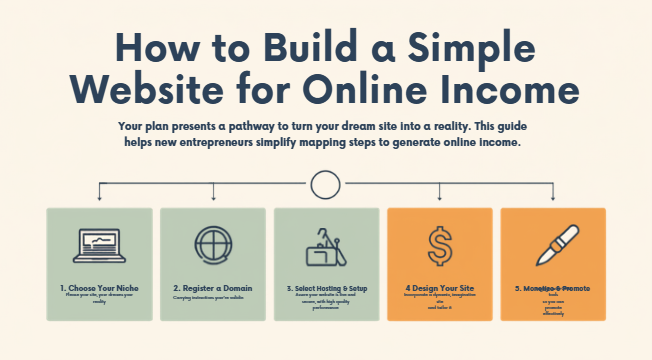
Step 1: Pick One Specific Topic (Seriously, Just One)
My original failed website tried to cover tech news, product reviews, and even some personal blogging all under one roof. It read like three different websites awkwardly stitched together, and neither Google nor actual readers could figure out what the site was really “about.”
The site that worked focused entirely on budget tech recommendations for students. Narrow, specific, and because of that narrowness, it actually started ranking for relevant searches within a few months instead of getting lost among massive, established competitors covering everything.
Step 2: Choose the Right Platform (Don’t Overthink This Part)
I spent almost two weeks comparing website builders before my first attempt, which in hindsight was a complete waste of time relative to actually building something. Here’s the simplified version of what I’d tell a friend today:
- WordPress.org (self-hosted) is the most flexible option and what most serious content or affiliate sites end up using long-term. It has a slight learning curve but nothing unmanageable.
- WordPress.com or Wix are easier for absolute beginners but come with more limitations as you grow, particularly around monetization flexibility.
- Blogger (Google’s free platform) is genuinely fine for a very simple starting point, especially if budget is tight, though it looks less professional long-term.
I eventually settled on self-hosted WordPress because most affiliate programs and ad networks work smoothly with it, and there’s a massive amount of free tutorials and plugins available whenever you get stuck.
Step 3: Get Hosting and a Domain (Don’t Overspend Here Either)
My first mistake here was buying an expensive hosting plan I didn’t need, convinced more expensive automatically meant better. For a new website with minimal traffic initially, a basic shared hosting plan is genuinely enough — you can always upgrade later once traffic actually justifies it.
For the domain name itself, keep it simple, easy to spell, and reasonably related to your topic if possible. I overthought my first domain name for way too long, when honestly, a decent, clear name matters far less than what you actually put on the site afterward.
Step 4: Install a Simple, Clean Theme
This is where I wasted the most time on my first attempt — endlessly tweaking a theme, adjusting colors, testing different fonts, convincing myself the design needed to be “just right” before I could start actually publishing content. Looking back, visitors barely noticed or cared about most of those details.
Pick a free, clean, mobile-friendly theme (most modern WordPress themes are mobile-responsive by default now) and move on. You can always refine the design later once you actually have content and visitors to justify spending more time on it.
Step 5: Set Up the Basic Pages You Actually Need
Before publishing your first piece of content, a few basic pages make your site look legitimate and functional:
- An About page explaining who you are and what the site covers, even briefly.
- A Contact page, even just a simple form or email address.
- A Privacy Policy page, which is genuinely required if you plan to run ads through something like Google AdSense eventually.
- A simple homepage that clearly explains what the site is about, without needing to be elaborate.
I skipped the Privacy Policy page entirely on my first site and had to scramble to add one later when trying to apply for AdSense, which delayed my approval by a couple of weeks unnecessarily.
Step 6: Start Publishing Actual Content (This Is the Real Work)
Here’s the part that genuinely determines whether your website earns anything — consistently publishing content that answers real questions people are actually searching for. I used a free keyword research tool to find specific questions related to my niche, prioritizing search terms with clear buying or informational intent rather than vague, overly broad topics.
My first genuinely successful article answered one very specific question: which budget laptops actually handle basic coding software well for students. Specific, useful, and clearly written for one particular type of reader with one particular need.
Step 7: Add Monetization Once You Have Some Actual Content
I made the mistake of trying to apply for Google AdSense with only four thin articles published. Rejected, obviously — not enough substantial content yet. Once I had around 15-20 genuinely useful, reasonably detailed articles, approval came through without issues.
Depending on your niche, you can monetize through:
- Display ads (Google AdSense being the most common starting point)
- Affiliate links relevant to your specific niche
- Selling a simple digital product eventually, like a template or basic guide
Don’t try to add every monetization method at once early on — it usually just clutters the site and confuses visitors about what you’re actually offering.
A Real Example of How This Played Out
That budget-laptop-focused website took roughly seven months before it started generating any meaningful income, and even now, it’s a modest side income rather than a full replacement for other work. But the trajectory was clear and steady once I stopped overcomplicating the setup and focused entirely on publishing consistent, genuinely useful content within one specific niche.
Compare that to my first failed attempt, which despite months of tweaking design elements and switching themes repeatedly, published maybe six total articles across an entire year because I kept getting distracted by non-essential details.
Common Mistakes to Avoid
Spending too much time on design before you have any content. Visitors come for answers to their questions, not your color scheme choices.
Picking too broad a niche. “Technology” or “lifestyle” are nearly impossible to rank for as a new, small website competing against massive established sites.
Skipping essential pages like Privacy Policy. It’ll come back to bite you when you try to monetize later.
Publishing inconsistently. A burst of five articles followed by three months of silence doesn’t build the kind of steady authority search engines and returning readers respond to.
Trying every monetization method simultaneously from day one. Focus on one or two that genuinely fit your niche instead of cluttering the site with ads, affiliate links, and product pitches all at once.
Giving up before six months. Almost nothing meaningful happened for my successful site until around month five or six. That’s a completely normal timeline, not a sign something’s wrong.
Final Thoughts
Building a website that eventually earns money isn’t about technical complexity or perfect design — it’s mostly about picking a narrow enough topic, publishing genuinely useful content consistently, and being patient enough to let search engines and readers actually notice you over time.
I still think about that first overcomplicated website sometimes, mostly the sheer amount of time I spent tweaking things nobody but me ever noticed. If you’re starting today, keep it simple, publish something real instead of perfecting the design endlessly, and give it genuine time before deciding whether it’s working. That patience is really the only “secret” involved.