My aunt called me in a panic a while back because she’d just sent 8,000 rupees to “activate her withdrawal” on some app that promised she’d earned over 40,000 rupees just from watching product videos for two weeks. She’s not a careless person by any means — she’s genuinely careful with money — but the app had a professional-looking dashboard, a countdown timer creating urgency, and even a fake customer support chat that kept reassuring her. She wanted to believe it because 40,000 rupees for two weeks of casual phone scrolling sounded like exactly the kind of thing everyone online keeps promising is possible.
It wasn’t real, obviously. The moment she paid that “activation fee,” the app went quiet, then eventually became inaccessible entirely.
I’ve seen versions of this story play out with friends, cousins, and random people messaging me for advice after getting burned. And honestly, I nearly fell for a smaller version of this myself once, which I’ll get into. The scams keep evolving, but the warning signs stay remarkably consistent once you know what to actually look for.
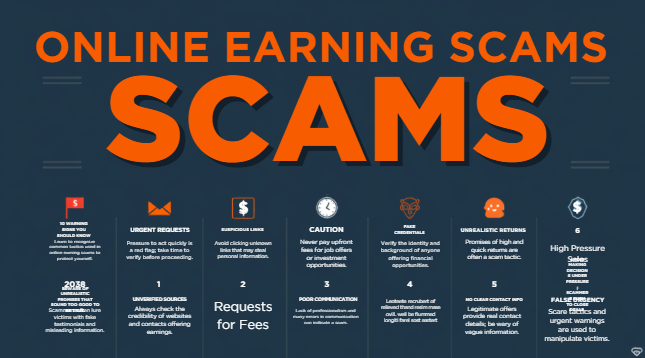
1. Any Request for Upfront Payment Before You Earn Anything
This is the biggest one, and it’s the pattern behind almost every scam I’ve personally encountered or heard about secondhand. Legitimate earning opportunities pay you for work, traffic, or sales you generate — they don’t need your money upfront to “unlock” your own earnings.
My aunt’s app framed this as an “activation fee,” but I’ve also seen it dressed up as a “registration fee,” a “training kit cost,” or a “refundable security deposit” that somehow never actually gets refunded. Different wording, same trap.
2. Promised Earnings That Don’t Match the Actual Effort Involved
If watching a few videos or clicking a few ads is supposedly worth thousands of rupees a day, stop and actually think about where that money is coming from. Legitimate ad-based platforms earn tiny fractions of a cent per view themselves — there’s simply no realistic way that translates into the kind of daily payouts these apps promise regular users.
I remember doing rough math on my aunt’s app afterward — even generously assuming the company profited from every video view, the numbers she was “earning” were wildly disconnected from anything remotely sustainable for them to actually pay out.
3. Heavy Emphasis on Referrals Over Actual Work
A platform that rewards you significantly more for recruiting new users than for the actual task you’re supposedly being paid for is usually a pyramid structure wearing a thin disguise. Legitimate referral programs exist (Upwork and plenty of others have them), but they’re a small bonus on top of real work, not the entire core mechanism of how you’re expected to earn.
If most of the app’s messaging is about sharing your invite link rather than the actual task itself, that imbalance tells you a lot.
4. Countdown Timers and Artificial Urgency
“Only 3 spots left today,” “offer expires in 10 minutes,” “limited time bonus” — I’ve noticed these appear constantly on scam platforms specifically to stop you from pausing and actually thinking it through or researching it first. Legitimate opportunities rarely need to pressure you into immediate decisions.
The app my aunt used had a countdown timer on the withdrawal page itself, which in hindsight was clearly designed to rush her into paying that “activation fee” before she second-guessed herself.
5. No Verifiable Company Information
I now always check for this specifically — a real registered business name, actual physical address, and identifiable company details, usually somewhere in a footer or terms of service page. When I looked into my aunt’s app afterward, there was genuinely nothing verifiable behind it. No registered company, no clear ownership, nothing beyond a generic “About Us” paragraph that could apply to literally any business.
6. Fake or Suspiciously Generic Testimonials
Stock photos with names like “Ahmed, Karachi” paired with vague praise like “This app changed my life!” should raise your guard immediately. I nearly fell for this exact pattern once myself with a different platform — the testimonials looked convincing at a glance until I actually reverse-image-searched two of the profile photos and found they were stock images used across several completely unrelated scam sites.
7. Withdrawal Problems That Appear Right When You’re About to Cash Out
This is almost a signature move at this point. Everything works smoothly until you hit the actual payout threshold, and suddenly there’s a mysterious “verification issue,” a new hidden fee, or a technical glitch that conveniently blocks your withdrawal. My aunt’s situation followed this exact script — smooth sailing until the exact moment real money was supposed to leave the platform and enter her account instead.
8. Customer Support That’s Either Nonexistent or Oddly Scripted
Legitimate platforms have responsive, specific customer support that can address your actual situation. Scam platforms often either ignore you entirely once there’s a problem, or respond with generic, copy-pasted messages that don’t actually address what you’re asking. My aunt’s “support chat” kept repeating some version of the same reassurance regardless of what she typed, which in hindsight was almost certainly an automated bot, not an actual person.
9. Pressure to Keep the Opportunity Private or “Exclusive”
I’ve noticed a specific pattern where scam recruiters tell people not to share the opportunity widely, framing it as “exclusive” or something you shouldn’t “ruin” by telling everyone. In reality, this discourages you from getting outside opinions from people who might recognize the scam pattern immediately. Legitimate opportunities generally don’t discourage you from asking around or researching them openly.
10. No Track Record You Can Verify Independently
Before committing real time or money to anything, I now specifically search outside the platform itself — Reddit threads, independent forums, YouTube videos, even just “[platform name] complaints” on Google. Legitimate platforms usually have a visible, searchable history of real users discussing their actual experience, both good and bad. Scam platforms tend to have either nothing at all, or a suspicious cluster of complaints appearing right around the same time period.
A Close Call I Had Myself
A while after freelancing had already become a real income source for me, I got a message about a “content writing agency” offering surprisingly high per-article rates for relatively simple work. Everything looked legitimate on the surface — a real-looking website, a proper onboarding process, even a sample contract. What stopped me was a small detail: they wanted me to pay a “software license fee” to access their “proprietary writing platform” before I could start receiving assignments.
That one detail was enough to make me pause and search around, and sure enough, I found a handful of complaints from other writers describing the exact same pattern — pay the fee, get one small task, then radio silence. I’m genuinely glad that one specific red flag was enough to stop me before I lost anything.
What to Actually Do If You Spot These Signs
Pause before reacting. Scams rely heavily on urgency specifically to prevent this pause, so deliberately slowing down is often enough on its own to break the spell.
Search independently before committing time or money. A quick search often surfaces other people’s experiences within minutes.
Never pay to unlock money you supposedly already earned. This is close to a universal rule at this point.
Trust specific red flags over general impressions. A professional-looking website means very little on its own anymore.
Talk to someone else about it before proceeding. An outside perspective, like what I gave my aunt afterward, often spots the pattern faster than you can when you’re emotionally invested in the opportunity being real.
Final Thoughts
My aunt eventually reported the app and, unsurprisingly, never saw that 8,000 rupees again, though at least she stopped before losing more. What actually helped her afterward wasn’t some elaborate lesson — it was simply learning to recognize these specific patterns so the next similar-looking opportunity doesn’t fool her again.
These scams aren’t going anywhere, and honestly, they keep getting more polished and convincing over time. But the underlying patterns barely change. Learn to spot the specific signs rather than judging based on how professional something looks on the surface, and you’ll save yourself a lot of the frustration and financial loss that people around me have gone through learning this the hard way.