For the first four months of running my niche blog, I genuinely thought Google was just ignoring me personally. I’d publish an article, check my analytics obsessively for a few days, see basically nothing, and assume the whole “SEO” thing everyone talked about was overhyped nonsense. Then one random Tuesday, I checked my dashboard and saw 340 visitors on a single article I’d published almost three months earlier and completely forgotten about.
That was my actual introduction to how SEO really works — not some instant switch you flip, but this weirdly delayed payoff where the effort you put in months ago quietly starts working while you’re not even paying attention anymore. Once I understood that timeline, and fixed a bunch of dumb early mistakes, growth actually became somewhat predictable instead of feeling like random luck.
If you’re staring at low traffic numbers right now wondering if you’re doing something fundamentally wrong, let me walk through what actually moved the needle for me, mistakes included.
Why My Early Articles Basically Got Ignored
Looking back at my first ten or so articles, almost none of them were written around an actual search term someone would type into Google. I was writing what I found interesting, not what people were actually searching for. There’s a massive difference between those two things, and it took me embarrassingly long to understand it.
My earbuds review article (yes, the same one from my affiliate marketing struggles) was titled something vague like “My Thoughts on Budget Earbuds.” Nobody searches that. Compare that to an article I wrote later titled “Best Budget Wireless Earbuds Under $30 for Students” — specific, matching actual search intent, and it started getting consistent traffic within a couple of months.
Step 1: Understand What People Are Actually Searching For
This is where keyword research comes in, and it sounds more technical than it actually is. I use free tools like Google’s own autocomplete suggestions, the “People also ask” boxes on search results pages, and a free version of Ubersuggest to see roughly how many people search specific terms monthly.
The goal isn’t finding some secret high-traffic keyword nobody else knows about — those rarely exist for beginners. It’s finding specific, slightly narrower search terms that have decent search volume but aren’t already dominated by massive, established websites you can’t realistically outrank yet.
Step 2: Match Your Content to Search Intent
I didn’t understand this distinction for way too long. Someone searching “best budget laptop” wants a comparison or recommendation article. Someone searching “how does laptop RAM work” wants an explanation, not a buying guide. I once wrote a buying-guide-style article targeting a clearly informational search term, and it never ranked well, because it didn’t actually match what Google (and real searchers) expected from that specific query.
Before writing anything now, I actually Google the exact term first and look at what kind of content is already ranking — list format, comparison, tutorial, whatever it is — and make sure my content genuinely fits that expected format.
Step 3: Write Genuinely Useful, Detailed Content
There’s no way around this part. My early articles were often 400-500 words, thin, and honestly kind of rushed. The articles that eventually performed well were usually 1200+ words, covering the topic thoroughly enough that a reader wouldn’t need to click back to Google and check another article for missing information.
This doesn’t mean padding content artificially just to hit a word count — that’s obvious to readers and apparently to Google too. It means genuinely answering the question completely, including details a rushed article would skip.
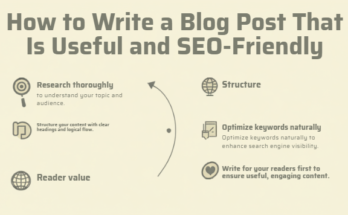
Step 4: Get Your On-Page Basics Right
This part is more mechanical, but it matters. A few things I make sure of on every article now:
- A clear, specific title that includes the main phrase someone would actually search, without being unnaturally stuffed with keywords.
- Headers (H2s, H3s) that break up the content logically, making it easier for both readers and search engines to understand the structure.
- A meta description that accurately summarizes what the article covers, since this often shows up directly in search results and affects whether someone actually clicks through.
- Internal links to other relevant articles on my own site, which I completely ignored early on and later realized helps both readers explore more content and helps Google understand my site’s overall structure.
Step 5: Be Patient With the Timeline (Seriously)
I mentioned that 340-visitor moment earlier, and I want to emphasize just how disconnected it felt from any specific action I’d taken around that time. That article had been sitting there quietly for months before it started ranking meaningfully. New websites especially go through what a lot of people call a “sandbox period” — a stretch where even decent content just doesn’t rank well yet, purely because Google hasn’t built up enough trust or history with your site.
Knowing this ahead of time would’ve saved me a lot of frustrated assumption that I was doing everything wrong during those first few months.
Step 6: Build Some Genuine Backlinks (But Don’t Obsess Over This Early On)
Backlinks — other websites linking to your content — matter for SEO, but as a beginner, I wouldn’t stress over this too heavily initially. What actually worked for me was naturally earning a few links by writing genuinely useful, specific content that other bloggers occasionally referenced, rather than chasing artificial link-building schemes, which can actually backfire if done poorly.
One small win I remember was a local tech Facebook group sharing my laptop comparison article organically, which brought a small but real traffic and credibility boost, completely unplanned on my part.
Step 7: Keep Older Content Updated
This one surprised me. I assumed once an article was published and ranking decently, the work was done. Then I noticed a previously well-performing article slowly losing traffic over several months, and realized the specific laptop models I’d recommended were outdated and some were no longer even available.
Updating that article with current models and pricing brought traffic back up within a few weeks. Now I periodically revisit older content instead of assuming it stays relevant forever on its own.
A Real Example of Slow, Steady Growth
My niche blog went from that initial 340-visitor surprise to eventually averaging a few thousand monthly visitors after about a year and a half of consistent publishing — not viral numbers by any means, but steady, real traffic that translates into actual ad and affiliate income. The growth wasn’t linear either. Some months barely moved, then a cluster of older articles would suddenly start ranking better all at once, seemingly unrelated to anything specific I’d done that particular month.
Common Mistakes Beginners Make With SEO
Writing for yourself instead of for actual search intent. Interesting to you doesn’t automatically mean searched-for by anyone else.
Expecting fast results and giving up around month two or three. That’s often right before things start actually moving, based on my own experience and plenty of others I’ve talked to.
Keyword stuffing unnaturally. Repeating the same phrase awkwardly throughout an article reads poorly to actual humans and doesn’t help rankings the way it might have a decade ago.
Ignoring mobile experience. A huge chunk of search traffic comes from phones, and a website that’s clunky or slow on mobile quietly loses both readers and rankings.
Never updating older content. Stale information slowly bleeds traffic even from articles that once performed well.
Chasing every trending topic instead of staying focused on your niche. Random unrelated articles dilute what your site is actually known and trusted for, at least according to what I’ve observed with my own site’s more successful, focused content versus my occasional off-topic detours.
Final Thoughts
SEO isn’t some mysterious algorithm-hacking skill reserved for professionals — it’s mostly just genuinely understanding what people are searching for and creating content that actually answers it thoroughly, then being patient enough to let that effort compound over months rather than days.
I still remember refreshing my analytics dashboard obsessively during those first frustrating months, convinced nothing was working. It was working, just slower and quieter than I expected. Focus on genuine usefulness over shortcuts, get comfortable with a longer timeline than feels natural, and keep publishing consistently even when the numbers aren’t moving yet. That combination is really what eventually turns into steady, real traffic.