I once spent two weeks “working” for a platform called something like “TaskEarn” (name changed, but you’ve probably seen a clone of it) that had me watching ads, filling surveys, and referring friends for points that would supposedly convert to cash once I hit a certain threshold. I hit that threshold. Then the withdrawal button conveniently “wasn’t working.” Then customer support stopped replying. Then the site just quietly disappeared a month later.
I wasn’t some naive first-timer either — I’d already been freelancing for a while by that point. I just got lazy, saw a friend post a screenshot of a “payout,” and skipped the due diligence I normally do. That mistake taught me more about spotting fake platforms than any of the legitimate ones ever did, honestly.
Since then, I’ve gotten a lot more careful about evaluating any new platform before putting real time into it, and I want to walk you through exactly what I check now, because the scam platforms are genuinely getting better at looking convincing.
Why This Actually Matters More Than People Think
It’s not just about losing money you paid upfront, though that happens too with some schemes. It’s about losing time — sometimes weeks of effort — for a payout that was never coming. Time is the thing you can’t get back, and a lot of people learn this lesson the hard way, exactly like I did.
The frustrating part is that legitimate platforms and scam platforms often look shockingly similar on the surface. Clean design, testimonials, even fake urgency like “only 50 spots left today.” So you need to actually know what to check beneath the surface, not just judge based on how professional the website looks.
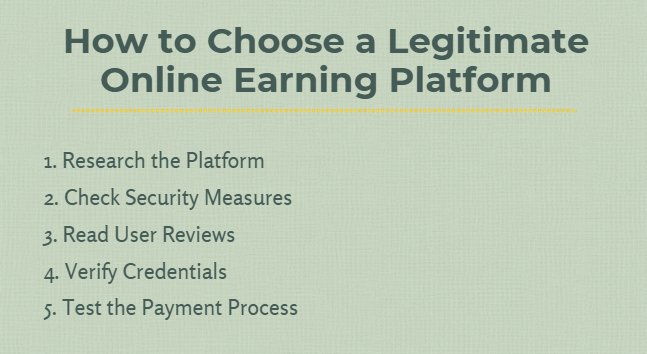
Step 1: Check How the Platform Actually Makes Money
This is the single biggest question I ask now before joining anything. Legitimate platforms have a clear, sensible business model — Upwork and Fiverr take a percentage cut from freelancer earnings, Amazon Associates gets a marketing benefit from affiliate-driven sales, survey sites get paid by market research companies for consumer data.
If you genuinely can’t figure out how a platform makes enough money to pay you, that’s a massive red flag. “TaskEarn” never made sense from this angle — I was earning points from watching ads that probably generated fractions of a cent, but the platform promised payouts far higher than that math could realistically support. I just didn’t stop to actually think it through at the time.
Step 2: Search for Real Payment Proof (Not Just Testimonials On Their Own Site)
Testimonials posted directly on a platform’s own website mean almost nothing — anyone can write those. What actually matters is searching outside the platform entirely. A quick search like “[platform name] payment proof” or “[platform name] scam” on Google, Reddit, or even YouTube usually surfaces real user experiences pretty quickly.
When I did this search for “TaskEarn” after the fact (yes, after losing my time, not before — lesson learned), I found several Reddit threads from months earlier describing the exact same withdrawal issue I eventually ran into. Had I searched this before joining, I’d have skipped it entirely.
Step 3: Look at How Long the Platform Has Actually Existed
Newer platforms aren’t automatically scams — everything legitimate had to start somewhere. But combined with other red flags, a very new platform with no established track record deserves extra scrutiny. I usually check domain registration age using a free WHOIS lookup tool, along with checking if their social media presence has any real engagement history or just looks freshly created with bot-like followers.
Step 4: Read the Payment Terms Carefully (Not Just Skim Them)
Legitimate platforms are usually upfront and specific about payment thresholds, processing times, and any fees involved. Vague or constantly shifting terms are a warning sign. “TaskEarn” kept the withdrawal threshold suspiciously vague until I’d already put in enough effort to actually hit it, which in hindsight was clearly intentional.
Compare that to something like Fiverr or Upwork, where payment terms, fees, and processing times are clearly documented and consistent, and don’t mysteriously change right when you’re about to cash out.
Step 5: Be Extremely Wary of Any Upfront Payment Requirement
This one’s close to an automatic dealbreaker for me now. Legitimate earning platforms make their money from the work you generate for them or through commissions — not from charging you a “registration fee,” “training fee,” or “starter kit” cost before you can begin.
I’ve seen this show up disguised in different ways — sometimes framed as buying a “certification,” sometimes as a refundable deposit that somehow never actually gets refunded. If a platform wants your money before you’ve earned anything, that’s rarely a legitimate setup.
Step 6: Check for Real Contact Information and Support
Legitimate platforms have identifiable company information, actual customer support channels, and often a physical business address or registration details somewhere in their footer or terms of service. When “TaskEarn” stopped responding, I realized I genuinely couldn’t find any verifiable company information behind the platform at all — no registered business name, nothing. That should’ve been an obvious red flag from day one.
Step 7: Trust Specific Details Over General Vibes
A well-designed website with professional-looking graphics can still be a scam — design has gotten cheap and easy to fake convincingly. What’s harder to fake is specificity. Legitimate platforms usually have detailed FAQ sections addressing edge cases, clear explanations of how their algorithm or matching system works, and consistent policies that don’t change based on who’s asking.
Scam platforms tend to stay vague on purpose, because specificity creates things that can be fact-checked and eventually contradicted.
A Real Comparison: Legitimate vs Sketchy Platform I’ve Used
On the legitimate side, Payoneer has been genuinely reliable for me for years now — clear fee structure, responsive support when I’ve needed it, and consistent, predictable payment processing. I know exactly what to expect every single time.
Compare that to a different platform I tried briefly (a “content writing marketplace” that promised fast approval and immediate payouts), where the sign-up process felt oddly rushed, pushing me to add payment details before I’d even seen a single writing task available. I backed out before committing any real time, purely because that sequence felt backwards — legitimate platforms don’t usually need your payment information before you’ve done anything.
Common Mistakes People Make When Evaluating Platforms
Trusting a friend’s screenshot without verifying independently. I fell into this exact trap. Someone else’s genuine (or not-so-genuine) success doesn’t guarantee the platform is stable or trustworthy long-term.
Ignoring gut feelings about rushed sign-up processes. If a platform is pushing you toward payment details or personal information faster than seems reasonable, that pace itself is worth questioning.
Assuming professional design equals legitimacy. Plenty of scam sites now look more polished than some genuinely legitimate small platforms.
Not researching before investing serious time. A fifteen-minute search before joining something new is a small price compared to weeks of wasted effort.
Overlooking payment terms until it’s time to actually withdraw. By then, if something’s wrong, you’ve usually already put in the unpaid effort.
Final Thoughts
Not every online earning platform is out to scam you — plenty of genuinely legitimate ones exist and have paid me reliably for years. But the fake ones have gotten noticeably more convincing, which means the burden really is on you to check things properly before committing real time and effort.
I don’t think about that “TaskEarn” situation with much anger anymore, mostly just mild annoyance at myself for skipping steps I already knew to take. Do the research upfront, trust verified proof over polished design, and treat any request for upfront payment as a serious red flag. It’s a small amount of extra effort that saves you from a much bigger waste of time down the line.